
Blog

Blog
Welcome to the Integrated Blog. We are committed to delivering cutting-edge industry insights, in-depth technical expertise, and actionable post-purchase guidance, empowering you with knowledge and solutions that fuel innovation in the security sector. Whether you're an industry veteran or new to the field, discover tailored resources and expert support here. At Integrated, let's redefine the future of security technology—together.
Access Control Systems Explained | How They Work 2026
In an era where physical and digital security boundaries are increasingly blurred, the implementation of a robust access control system has become vital to modern organizational safety. As a pioneer in secure entrance control, we have seen technology evolve from simple mechanical locks to sophisticated, AI-driven biometric ecosystems. Understanding how these systems function and which type of architecture best suits your unique needs is essential to protecting your assets, data, and personnel.
Whether you are managing a high-rise in the heart of Hong Kong or a distributed corporate network, the mission remains the same: providing a safe, customizable environment that balances stringent security with operational fluidity.

What Is Access Control in Security?
Access control is a security technique that regulates who or what can view or use resources in a computing or physical environment. In the context of physical security, an access control system acts as a smart lock on a digital door, ensuring that only authorized individuals can enter specific areas, such as server rooms, executive suites, or shared office spaces.
Modern solutions have moved far beyond the traditional key-and-lock model. Today’s systems prioritize
security, robustness, and flexibility. By integrating multi-factor authentication that combines PINs, smart cards, and advanced biometrics, organizations can add an extra layer of protection against potential threats. This ensures that a lost card does not automatically result in a security breach, as the system can require a secondary biological identifier, such as a fingerprint or face recognition, to grant entry.
How Access Control Systems Work
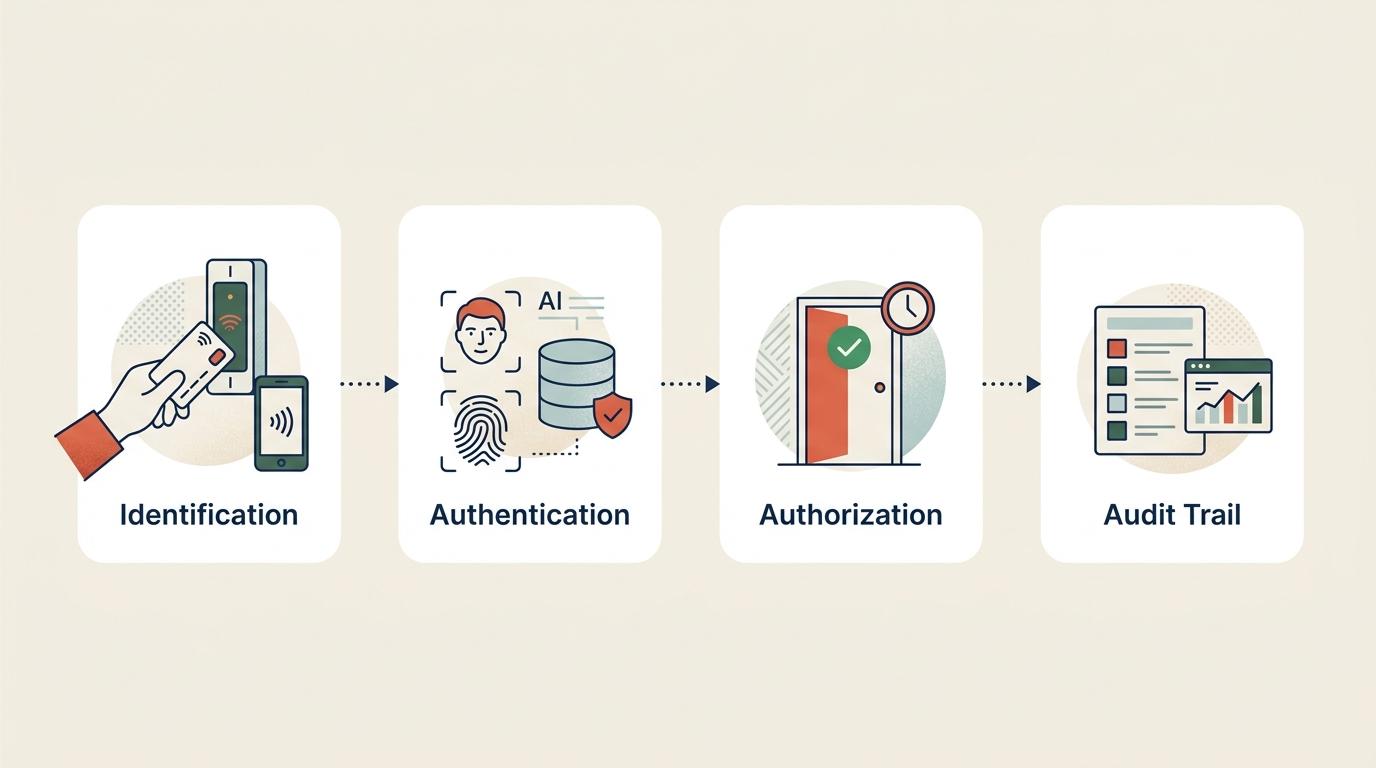
The mechanical process of a modern access control system involves a seamless interaction between hardware and software. The process typically follows a four-step sequence:
Identification: The user presents their credentials to a reader. This could be a contactless smart card, an NFC-enabled mobile device, or a biometric scan.
Authentication: The access control system verifies the credentials. This is where AI plays a critical role, particularly in biometric systems, by analyzing unique biological markers and comparing them against encrypted digital formats stored in a secure database.
Authorization: Once the identity is confirmed, the system checks the user's permissions. Does this individual have the right to enter this specific door at this specific time?
Reporting/Audit Trail: Every access attempt, whether granted or denied, is logged. This creates a powerful audit trail that enhances operational efficiency and provides critical data for security investigations.
By seamlessly integrating with existing HR infrastructure, these systems also help optimize workflows, allowing for automatic attendance tracking and the immediate revocation of credentials when an employee leaves the organization.
Types of Access Control Systems
Choosing the right framework is essential for maintaining the desired level of stringency. There are several types of access control models, each offering a different balance of security and administrative ease.
Discretionary Access Control (DAC)
Discretionary Access Control is often the most flexible model. In a DAC system, the resource owner has the discretion to grant access to others. This is one of the more common examples of access control in smaller office environments, where management software enables quick, individual authorizations. While highly user-friendly, it is considered less secure for high-risk areas because the control is decentralized.
Mandatory Access Control (MAC)
Mandatory Access Control is the most stringent of all types of access control. It is based on a centralized authority that assigns permissions based on strict security classifications. Users cannot change access rights; only the system administrator can. This model is ideal for organizations that strive for maximum security protocols, such as government facilities or research labs handling sensitive data.
Role-Based Access Control (RBAC)
As the most secure approach for many global enterprises, RBAC provides access based on an individual's role within the organizational hierarchy. For instance, all "Managers" may have access to the executive floor, while "Technicians" only have access to the maintenance rooms. This redefines biometric security entrance control by ensuring that access is tied to professional responsibilities rather than individual identity alone.
Attribute-Based Access Control (ABAC)
ABAC is a highly sophisticated model that uses a combination of attributes to grant access. These can include user characteristics (department, seniority), environmental factors (time of day, location), and resource types. This level of granularity provides a tailored solution that can adapt to complex, real-time security needs.
Common Access Control Application Examples
To understand the versatility of these systems, we can look at several access control examples across different sectors:
Office and Corporate Buildings
In the corporate sector, the focus is on a seamless transition between the street and the workstation. Modern systems integrate with elevators and turnstiles, allowing employees to move through the building using a single "digital key" on their smartphone.
Residential and Apartment Complexes
For high-density residential areas, security and convenience are paramount. Access control system installations often include video intercoms and mobile app integration, allowing residents to grant guest access remotely while maintaining a robust perimeter against unauthorized entry.
Schools, Hospitals, and Public Facilities
In healthcare, access control protects sensitive patient records and restricted drug dispensing. In schools, it ensures that only authorized staff and students are on-site, providing a safe environment for learning while maintaining open-access public areas where appropriate.
Industrial Sites and Restricted Areas
Industrial sites often require "ruggedized" hardware that can withstand harsh environments. Here, biometric systems are vital, as traditional cards can be easily lost or damaged in heavy labor settings.
How to upgrade your Access Control Systems with AI?
The integration of AI is the most significant revolution in access control technology today. Upgrading your system with AI-powered face recognition redefines accuracy and speed. Unlike traditional systems that may struggle with lighting or different angles, AI algorithms can identify authorized personnel in milliseconds, even as they move. Furthermore, AI enhances security by integrating with CCTV systems to trigger monitoring alerts. The system can detect "tailgating," where an unauthorized person follows an authorized person through a door, and immediately notify security teams. This proactive approach transforms a passive gatekeeper into an intelligent, state-of-the-art security partner.
How to Choose the Right Access Control System
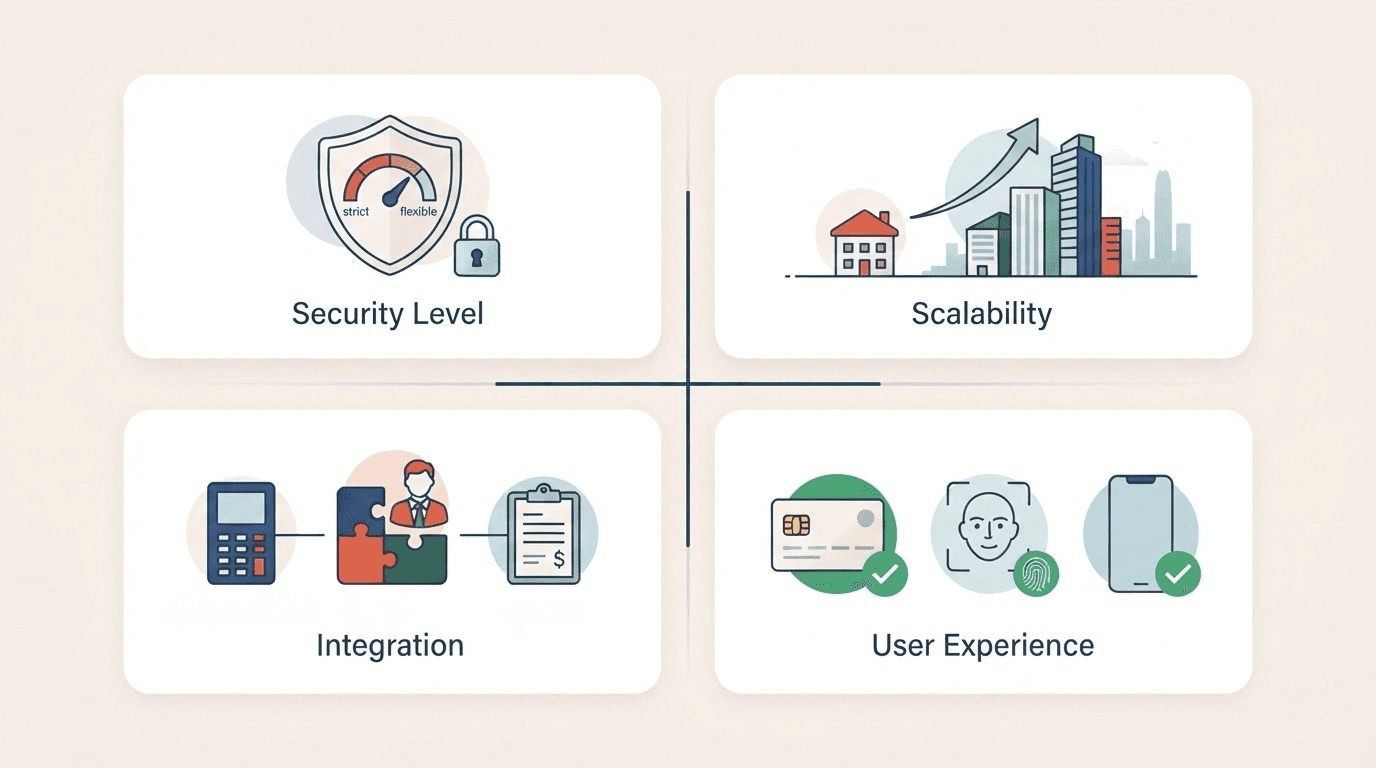
Selecting the ideal access control system requires a deep dive into your unique needs. Consider the following factors:
Security Level
Do you require the stringency of MAC or the flexibility of DAC?
Scalability
Can the system grow as your organization expands its footprint in Hong Kong and beyond?
Integration
Will it communicate effectively with your existing HR and payroll systems?
User Experience
Is the verification method (cards, biometrics, or mobile) convenient for your employees?
By seamlessly integrating with existing HR infrastructure, these systems also help optimize workflows, allowing for automatic attendance tracking and the immediate revocation of credentials when an employee leaves the organization.
Access Control System FAQs
What are the 4 types of access control?
The four primary types of access control are Discretionary Access Control (DAC), Mandatory Access Control (MAC), Role-Based Access Control (RBAC), and Attribute-Based Access Control (ABAC). Each offers a different level of administrative control and security stringency.
What is the best type of access control?
There is no "one-size-fits-all" answer, but for most professional organizations, Role-Based Access Control (RBAC) is considered the gold standard. It offers an excellent balance of high-level security, administrative efficiency, and scalability for global enterprises.
How Secure Are AI Access Control Systems?
AI access control systems offer top-tier security. Because they rely on unique biological identifiers and encrypted digital formats, they are nearly impossible to mimic or clone. When coupled with advanced encryption technology and multi-factor authentication, they provide the most robust protection available in 2026.