
Blog

Blog
Welcome to the Integrated Blog. We are committed to delivering cutting-edge industry insights, in-depth technical expertise, and actionable post-purchase guidance, empowering you with knowledge and solutions that fuel innovation in the security sector. Whether you're an industry veteran or new to the field, discover tailored resources and expert support here. At Integrated, let's redefine the future of security technology—together.
Smart Office System Guide | Top Workplace Solutions 2026
The global corporate landscape is undergoing a radical shift. In the post-COVID era, the definition of a "workplace" has expanded beyond four walls to encompass flexible, hybrid, and digital-first environments. To stay competitive in these evolving workplace landscapes, organizations must move beyond traditional infrastructure. By leveraging a robust smart office management system, businesses can transition from reactive maintenance to proactive, data-driven optimization. This guide explores how cutting-edge technology and integrated solutions are redefining the modern professional environment in 2026.
What Is a Smart Office?
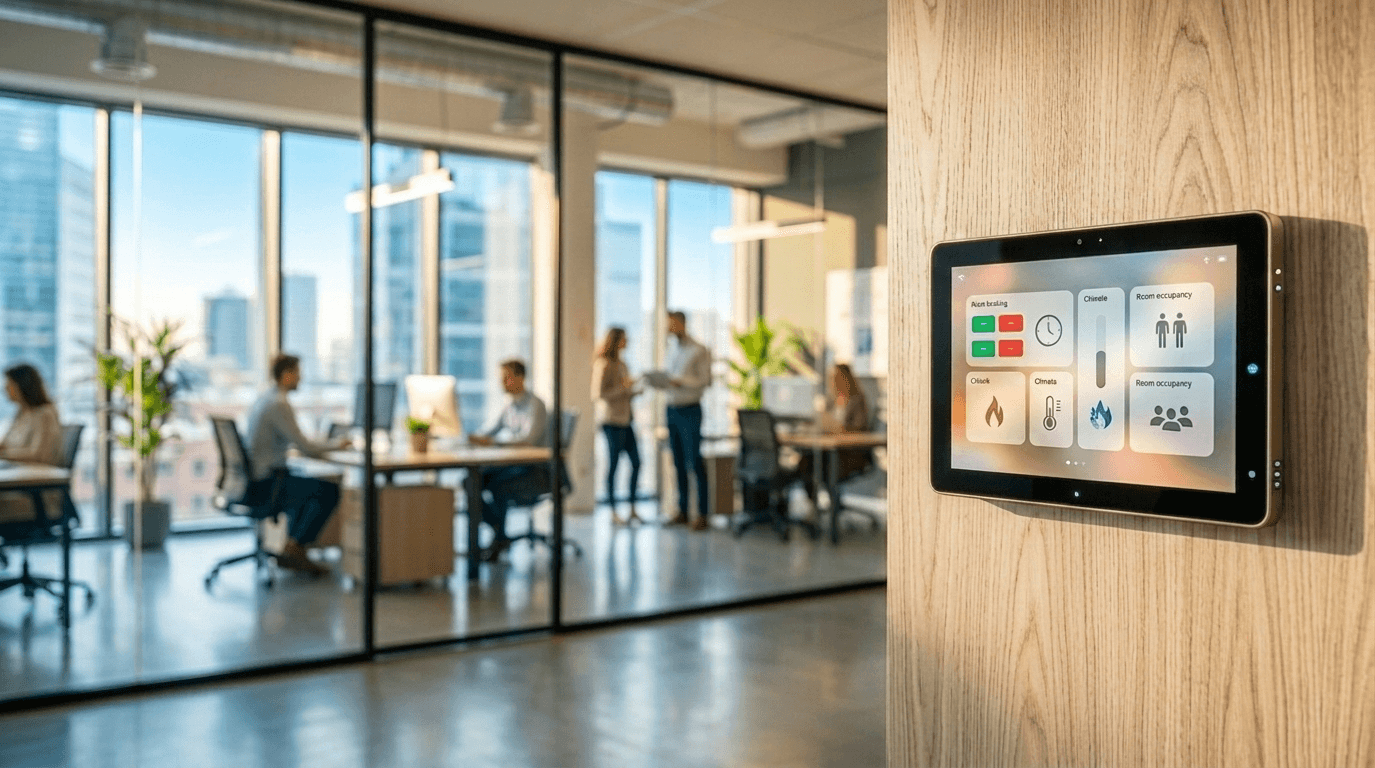
A smart office is not merely a collection of high-tech gadgets; it is a holistic ecosystem where the physical environment is seamlessly integrated with digital intelligence. It represents the intersection of human-centric design and the Internet of Things (IoT), creating a workspace that "thinks" and "responds" to the needs of its occupants.
Definition of a Smart Office System
A smart office management system functions as a central hub, integrating various devices, systems, and services via IoT technology. This solution leverages a network of sensors, AI software, and real-time data to create a unified interface for efficient shared resource management. It ensures that all office elements, from desk booking and lighting control to security, operate harmoniously. The overall goal is to enhance performance while simultaneously reducing operational costs.
How Smart Office Technology Transforms Modern Workplaces
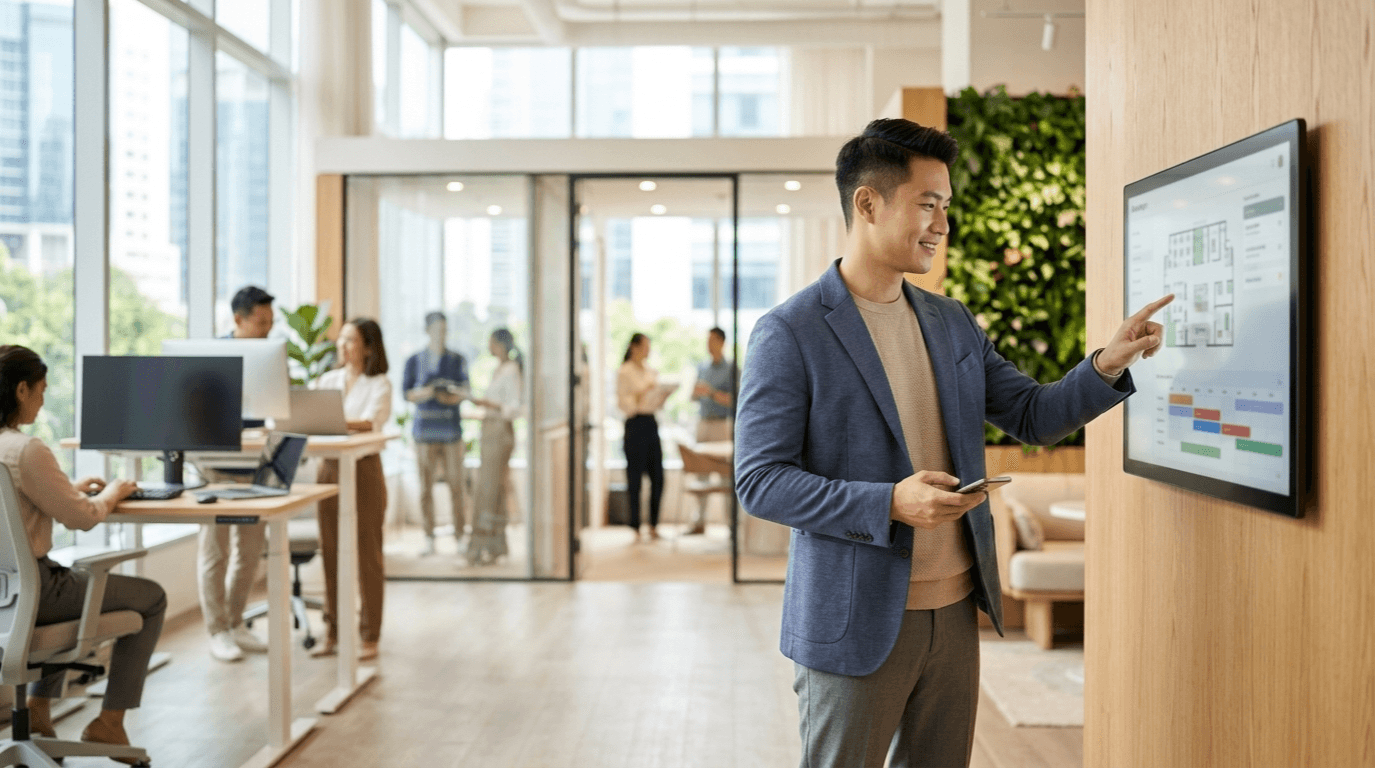
Turning the workplace from a cost center into a strategic asset, smart office technology provides real-time data on space and energy use, enabling management to optimize layouts. Automating tasks like climate control and locker management frees employees for high-value collaborative work, supporting hybrid models.
Benefits of Implementing a Smart Office System
Implementing a comprehensive smart office management system offers measurable returns on investment across multiple verticals, from human resources to facilities management.
Improved Workplace Efficiency and Productivity
Looking for an efficient workplace to boost productivity? A smart office offers the solution by eliminating the typical workday inefficiencies. Employees no longer need to scramble to find an available meeting room or create a manual, paper form timetable with a smart booking system in place. Such a solution integrates AI and IoT to streamline the whole process, saving employees’ time and resources.
Enhanced Employee Experience and Comfort
In 2026, the "Employee Experience" is a key metric for talent retention. Smart office technology allows for personalized climate and lighting control, catering to individual preferences. Furthermore, hybrid models provide a seamless "plug-and-play" experience, where an employee can book a desk, access a smart locker, and connect to the network instantly. This creates a sense of belonging and professional ease, regardless of how often they are physically in the office.
Better Security and Data Management
AI smart security solutions are now essential for the modern office, integrating robust data management with physical protection. Using tools like facial recognition and smart cards, these sophisticated systems continuously monitor people flow, detect unauthorized access in real-time, and secure data. The technology also provides valuable insights into movement patterns, which help in continuously optimizing existing security protocols.
Energy Savings and Sustainability
As organizations strive to meet ESG goals, "Go Green" initiatives have become mandatory. Energy-saving smart office technology uses sensors to monitor energy usage automatically. If a room is empty, the solution dims the lights and powers down the HVAC system. This not only reduces the carbon footprint but also significantly lowers utility expenditures, contributing to a more sustainable, eco-friendly workplace environment.
What technologies are used in smart offices?
The "intelligence" of an office is built on a layered stack of hardware and software that integrates seamlessly.
Smart Office Management Systems and Centralized Control
Acting as the system's "brain," the centralized smart office management system is the essential software layer. It processes and consolidates data from all connected sensors and devices, offering facility managers a comprehensive, "single pane of glass" interface. This capability allows it to orchestrate the various subsystems, guaranteeing that security, lighting, and room booking platforms, for instance, are all communicating and working together.
IoT, Sensors, and Workplace Automation
IoT is the nervous system of the smart office. Sensors (occupancy, temperature, CO2, and light) collect raw data points every second. Workplace automation then takes this data and acts upon it. For example, if a meeting ends early, sensors detect the empty room and immediately update the smart office management system to show the room as "Available" for others to book.
Smart Access Control and Security Integration
Modern solutions leverage AI for enhanced security. This includes:
Facial Recognition: For touchless, high-security entry.
Smart Cards: Integrating identification with cashless canteen payments or printer access.
Real-time Alerts: Notifying security personnel of unusual patterns or unauthorized entries immediately.
Smart Energy and Environmental Management
To achieve true sustainability, technology must manage the environment dynamically. Smart thermostats and automated blinds respond to external weather conditions and internal occupancy, ensuring the office remains at the "Goldilocks" temperature for productivity while minimizing wasted electricity.
How to Choose the Right Smart Office System
Selecting a solution requires a strategic approach. We recommend evaluating four critical factors:
Priorities: Identify if your most urgent need is hybrid work support, security, or energy reduction.
Integration: Ensure the new technology integrates seamlessly with your current infrastructure. Seamless integration is the difference between a tool and a system.
Flexibility: Choose scalable solutions that can adapt to your future business growth.
Budget: Align your investment with the technologies that offer the most impactful improvements to your specific operational model.

Smart Office System Trends in 2026
The trend for 2026 is the "Predictive Office." We are moving beyond simple automation toward AI that anticipates needs. For instance, the smart office management system may suggest a specific desk for an employee based on their historical preference for natural light or proximity to their immediate team members. Additionally, according to UC Today, smart office systems will become employee-centric, designed to improve the workplace experience. This explains that the rise of "Wellness Sensors" that monitor air quality and humidity is becoming a standard feature in digital workplaces to ensure peak employee health and cognitive function.
Transitioning to a Smart Office: A How-To Guide
Transitioning to a smart office environment should be a phased process:
Audit: Conduct a detailed evaluation of your current systems and physical space.
Consultancy: Engage with a digital transformation consultancy to map out a tailored strategy.
Pilot: Implement a "Smart Zone" (e.g., a specific floor or department) to test the IoT integration.
Scale: Roll out the solution across the organization, ensuring all employees are trained on the new platform.
At Integrated Corporation, we offer expert guidance and smart office solutions that ensure your transition is seamless, cost-effective, and future-proof.
Smart Office FAQs
What is a smart office system?
It is an integrated platform using IoT technology, sensors, and software to monitor and manage office resources, enhancing efficiency, security, and sustainability.
Is Smart Office Technology Suitable for Small Businesses?
Absolutely. Scalable solutions allow small businesses to start with basic technologies like smart access or energy management and expand as they grow. The reduction in operational costs often pays for the technology over time.
How Secure Are Smart Office Management Systems?
Modern solutions are designed with "Security by Design" principles. This includes encrypted data transmission, AI-driven threat detection, and multi-factor authentication for both physical and digital access.
What is smart office management?
It is the practice of using real-time data and automated solutions to oversee daily workplace operations. This includes managing space allocation, maintaining environmental comfort, and ensuring the safety of all occupants through a centralized technology interface.